"Who is Kamala Harris?"
/
Kamala Harris is America’s first female vice president, but her professional and personal lives have not been free of controversy. So who is the barrier-breaking VP, and is she presidential timber?
Read MoreTV news producer & documentary filmmaker interested in politics, foreign policy, the culture war, motorcycles, Muay Thai, and classical guitar.
Kamala Harris is America’s first female vice president, but her professional and personal lives have not been free of controversy. So who is the barrier-breaking VP, and is she presidential timber?
Read MoreThe Supreme Court ruled affirmative action unconstitutional, overturning fifty years of precedent. Cases against Harvard and UNC are the latest episode in the history of racial preferences in college admissions. Hosted by Laura Ingraham.
Read MoreI produced a 3-part documentary series detailing American decline. I explored cultural decline, economic decline, and foreign policy decline by interviewing some of the top conservative thinkers in the United States.
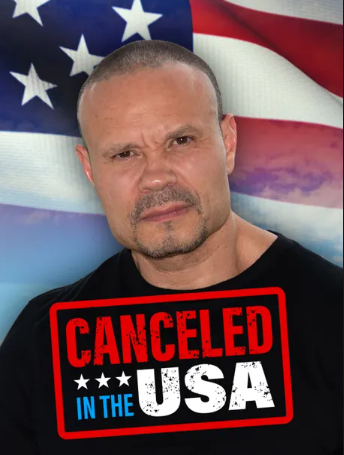
Read MoreI produced nine episodes of Canceled in the USA for Fox Nation. We profile Americans who have experienced cancelation campaigns. Hosted by Dan Bongino.
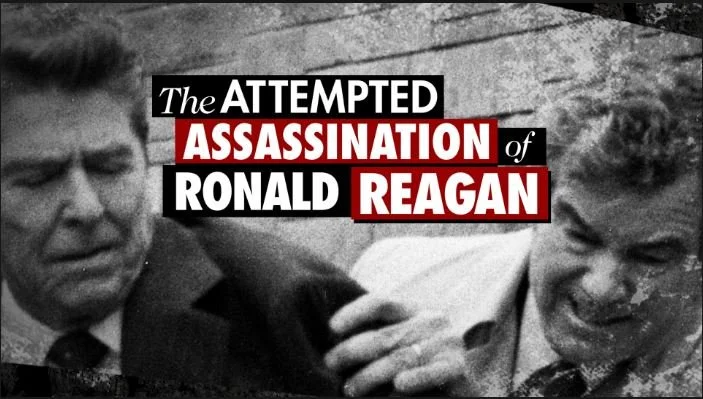
Read MoreRonald Reagan’s presidency was nearly cut short by a would-be assassin. Instead, Reagan miraculously survived, inspiring the nation and convincing the President that God saved him for a purpose.
Read MoreI interviewed law professor and legal scholar Richard Epstein for a Fox Nation 101 episode about court packing. It was a fascinating discussion and I learned a great deal from it. Epstein is a font of knowledge and wisdom on the topic.
Read MoreI recently completed a documentary on Brett Kavanaugh’s confirmation to the Supreme Court. This was a long-term project that took nearly a year of research and interviews.
Read MoreI lead-produced a special for Fox Nation and Fox News Channel about the history of the flu. Hosted by Harris Faulkner, our special looks at the Spanish Flu (1918), the Asian Flu (1957), the Hong Kong Flu (1968), the Swine Flus of 1976 and 2009, as well as the SARS CoV-19 virus we are currently dealing with. The full doc is available on Fox Nation. Promo clip below.
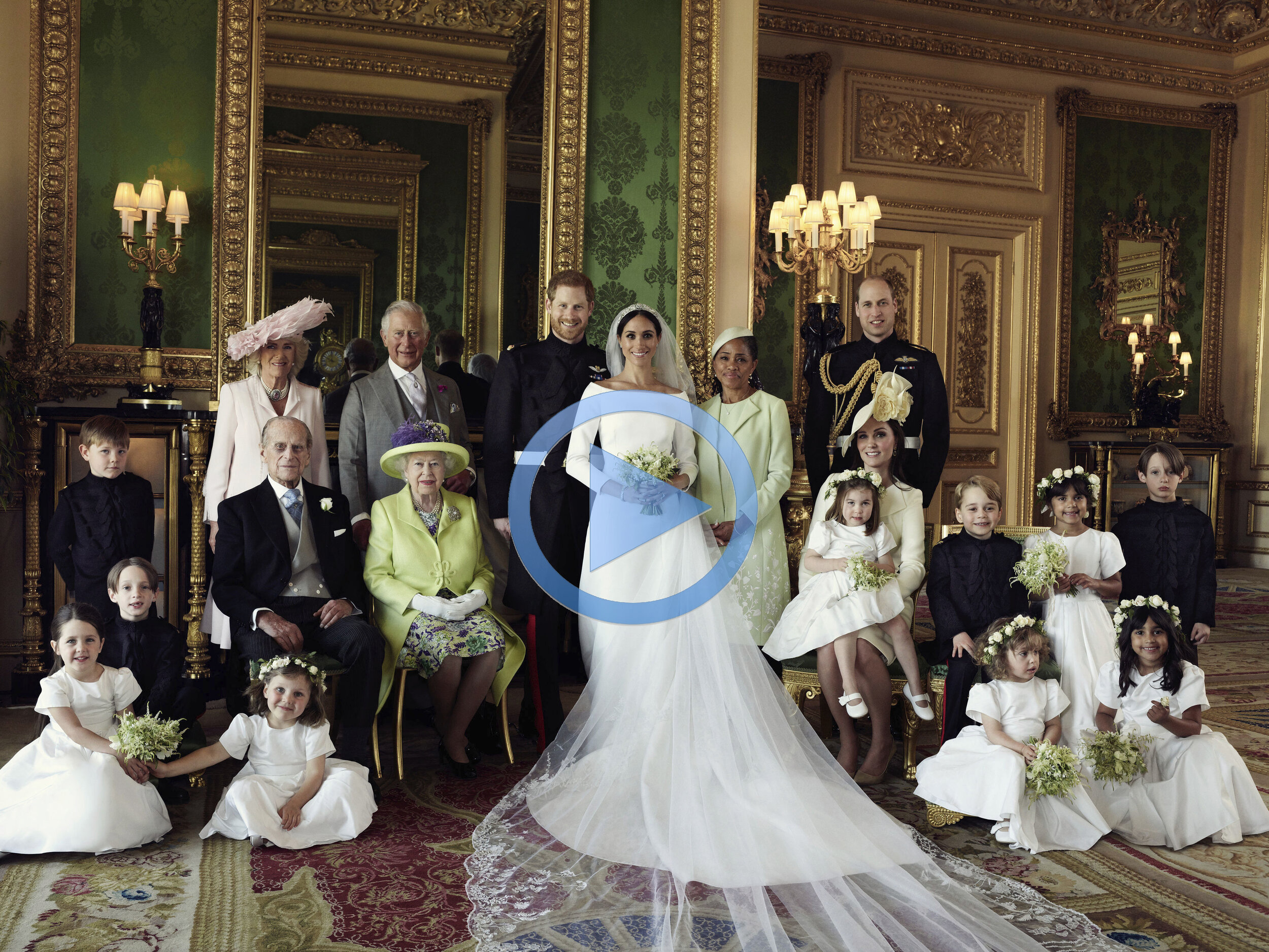
I produced a short doc about Harry and Meghan leaving the Royal family. It’s interesting! Hosted by Fox Nation’s Kacie McDonnell. Click through to watch.
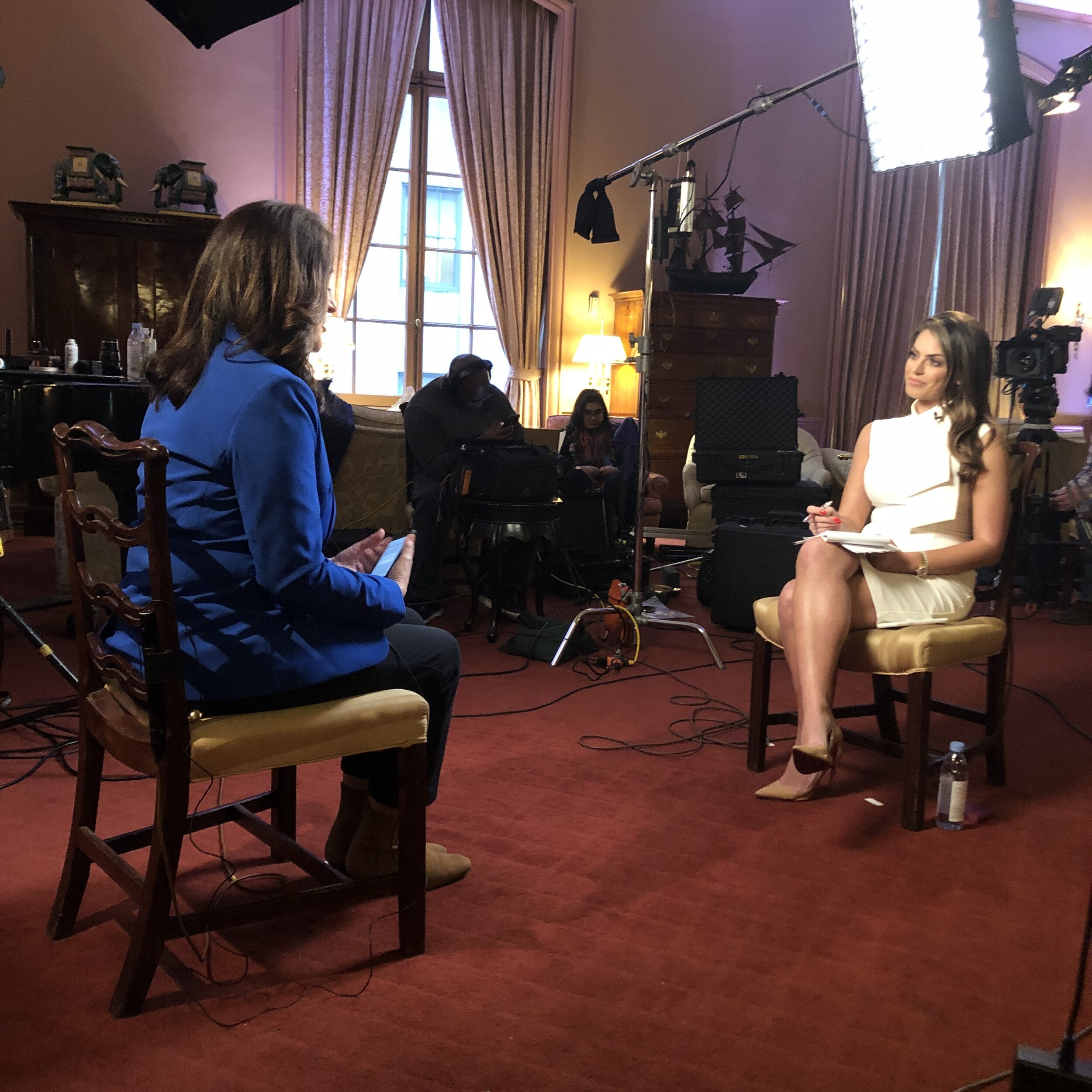
Kacie mcdonnell interviewing ny post columnist miranda devine.
Businessman Ralph Taylor, who learned he is 4% Black from a DNA test, is classified as Black by his state government and White by the federal government. This racial inconsistency means he’s eligible for affirmative action programs in Washington state but not in Washington, D.C. But rather than seeking to financially benefit from programs meant to redress past racial grievances, Taylor says he’s out to prove that “there is no valid definition of race.”
I'm launching a new weekly documentary series on Verizon Media with my awesome friend Caroline Modarressy-Tehrani (someone for whom I have nothing but the most effusive of praise) and a team of excellent producers whose names you don't know but who deserve praise. It's currently available on the Yahoo app in Roku and on the HuffPost website.
One of our first one-on-one interviews is with the Washington Post's Jason Rezaian, who spent 544 days in an Iranian prison and experienced Islamic justice. He wrote about it in his new book 'Prisoner'.
Watch the video interview here.
Happy Yalda Night!

Yalda celebrates the winter solstice, as the days become longer and the nights shorter in the northern hemisphere. In that sense, it spiritually celebrates the rebirth of the Sun Goddess Mithra (wall carving photo left). A deeply rooted ceremony, the annual observation of the winter solstice by Iranians and others signifies that man has known for thousands of years that THE SUN birthed all plant and animal life on our planet. Moreover, ancient Iranians' ability to accurately predict the solstice and to know key moments on the solar calendar is directly related to mankind's survival, prosperity, ability to plan for the future, and ability to conceive of time. Yalda is so old that it even predates Zoroastrianism-- Iran's religion prior to the Arab invasion and largely forced conversions to Islam-- and is really a Mithraic holiday that would soon be adopted by Zoroastrians.

While Iran's Zoroastrian faith placed the greatest emphasis on fire and light, traditional reverence for light was and remains common and extends well beyond the Iranian plateau. Jesus Christ, of course, is referred to as "the Light of the World", and the Scandinavian festival of St. Lucia similarly symbolizes bringing the "Light of Christianity" into the world. (Those interested in learning more about the deep religious influence Zoroastrian Iran had on the Holy Roman Empire should look up the Cult of Mithras)
Sometimes, it is difficult to conceive of a pre-modern, pre-industrial and pre-agricultural world and all its challenges to human survival. Cultivating a monumentalist relationship to history rooted in one's own heritage and longstanding annual rituals like Yalda is one way to spiritually surpass time and space and reconnect with previous epochs, in this case, one in which light was so rare and crucial as to be worshipped.
Regardless of humanity's divergent cultures and mutually-exclusive religious traditions, there is a common source of energy that binds us all to a shared past and a shared imaginative and interstellar future. While there are some 6,500 distinct languages with their own words for 'light', there is only ONE SUN that birthed us all. Happy Yalda!
I took this background photo at Persepolis (تخت جمشید) in 2015. I added scan lines, wave distortion, grain, Gaussian blur, an S-curve, and a 64% opacity pink fill.
The quote was recorded in A Dictionary of Thoughts, Being a Cyclopedia of Laconic Quotations from the Best Authors of the World, Both Ancient and Modern (pg. 259)
I met social psychologist and author Jonathan Haidt at a Thanksgiving party and, after striking up a conversation, he gave me a signed copy of his book "The Righteous Mind: Why Good People Are Divided by Politics and Religion."
I was going to write one long book review, but I realized it's way too much to review his takes on religion, evolution, morality, the emergence of civilized societies, and contemporary politics in one piece. Instead, I decided I would write a series of distinct short essays in response.
I applied Haidt's moral matrix to the NFL kneeling protests and #BlackLivesMatter. "Simply put, if you were in a hypothetical encounter with a police officer and could choose your race for the next half hour, which race would you choose to be?"
If I got anything wrong, feel free to leave an unhinged, ad hominem attack in the comments.
Read MoreApple, Google, Amazon and Facebook are, in some ways, more powerful than our federal government. The tech giants decide what information we see - and what we don't. Their decisions can close down whole industries. For many years, they stuck to sunny California. But today they're a huge presence in the Washington swamp, spending millions to make sure legislation goes their way, providing a lucrative revolving door between industry and government. And they're even secretly funding lapdog professors to make their arguments for them.
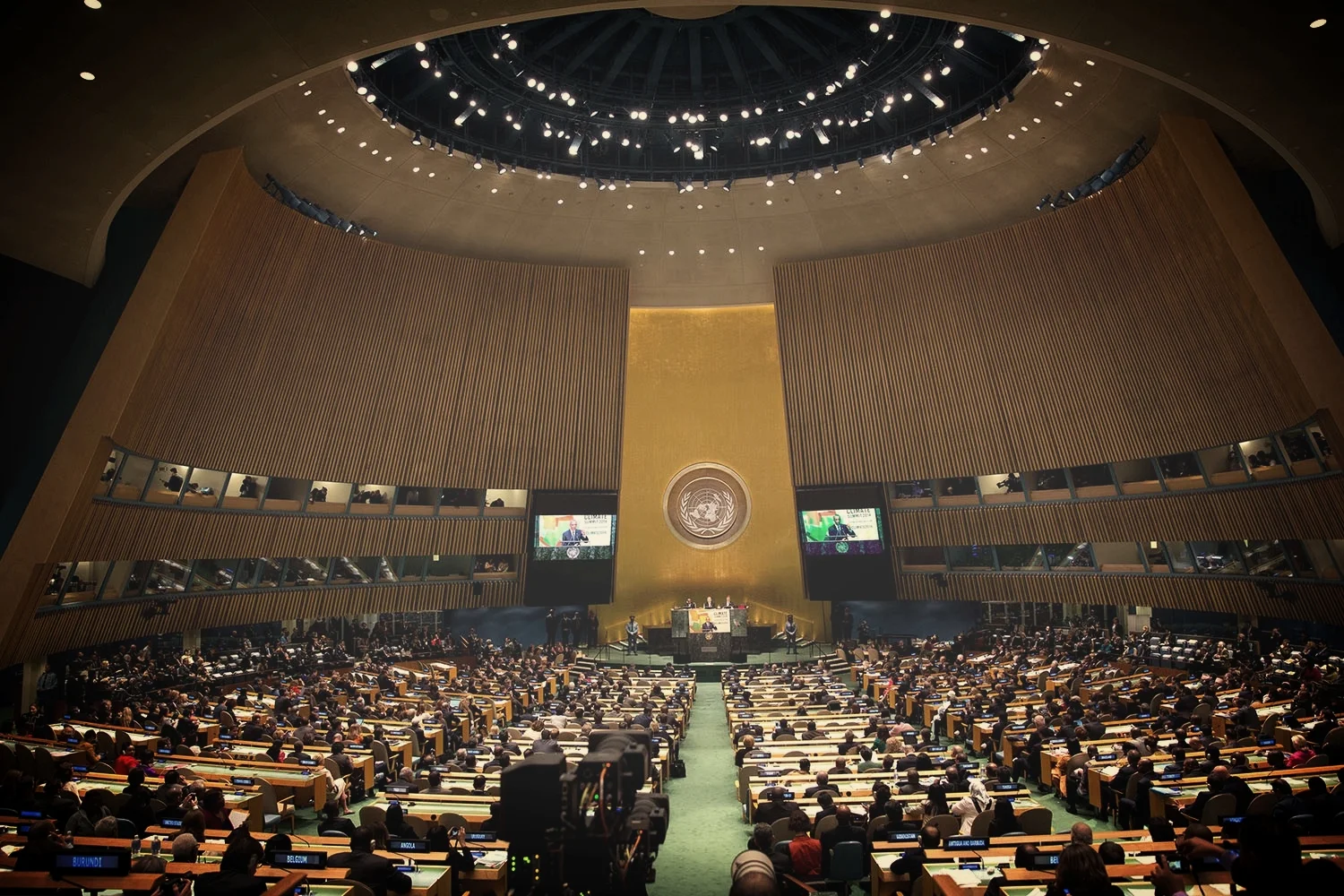
Read MoreThe annual UN General Assembly starts in New York this Tuesday, with President Trump scheduled to speak that morning.The UN is a sprawling international bureaucracy with endless different bodies and agencies. Its executive arm, the Secretariat, has a five and a half billion dollar budget... 22 percent of which is funded by you, the U.S. taxpayer. So, where exactly is your money going?
The United Nations is tonight's Swamp Watch.
Read MoreGiven Swamp Watch's measurable popularity, Fox decided to run a Swamp Watch Special on Sunday. We aired a montage of Swamp Watch clips and interviews with the indispensable Wall Street Journal columnist Kimberley Strassel, former lobbyist and convicted felon turned anti-corruption activist Jack Abramoff, Representatives Mike Gallagher and Ro Khanna, and New America senior fellow Lee Drutman.
Read MoreYou're going to hear a lot over the next few months about tax reform. But as you listen to the arguments, remember that our tax code is as much a part of the swamp as any other aspect of government. And the real scandal is that it benefits the elite at the expense of working Americans.
Read MoreHostile foreign governments have infiltrated the D.C. swamp. Even Saudi Arabia, whose state religion inspires ISIS, has an army of lobbyists doing their bidding. And what they want is often the opposite of what Americans want. We expose them on this Swamp Watch.
Read MoreIn a profile piece about anchor Steve Hilton and our new show The Next Revolution, the New York Times gave a shout out to Swamp Watch, the weekly segment I research, write, and produce.
“Last year, during his book tour for “More Human,” Mr. Hilton began appearing on Fox News programs to talk about Brexit and what it meant for the chances of Mr. Trump, then a candidate. After the election, Fox News offered Mr. Hilton a program. He and the network soon worked out a structure for the program with segments like “Swamp Watch” and “Decadent DC.””
This site is a digital portfolio of all of Kayvon Afshari's academic, policy, and satirical work. Kayvon is the host and EP of The Mideast Show, a satirical newscast all about the Middle East. He also serves as the Director of Communications for the American Iranian Council, a think tank dedicated to improving US-Iran relations.