Will be on BRICTV to discuss Visa Waiver Legislation next week

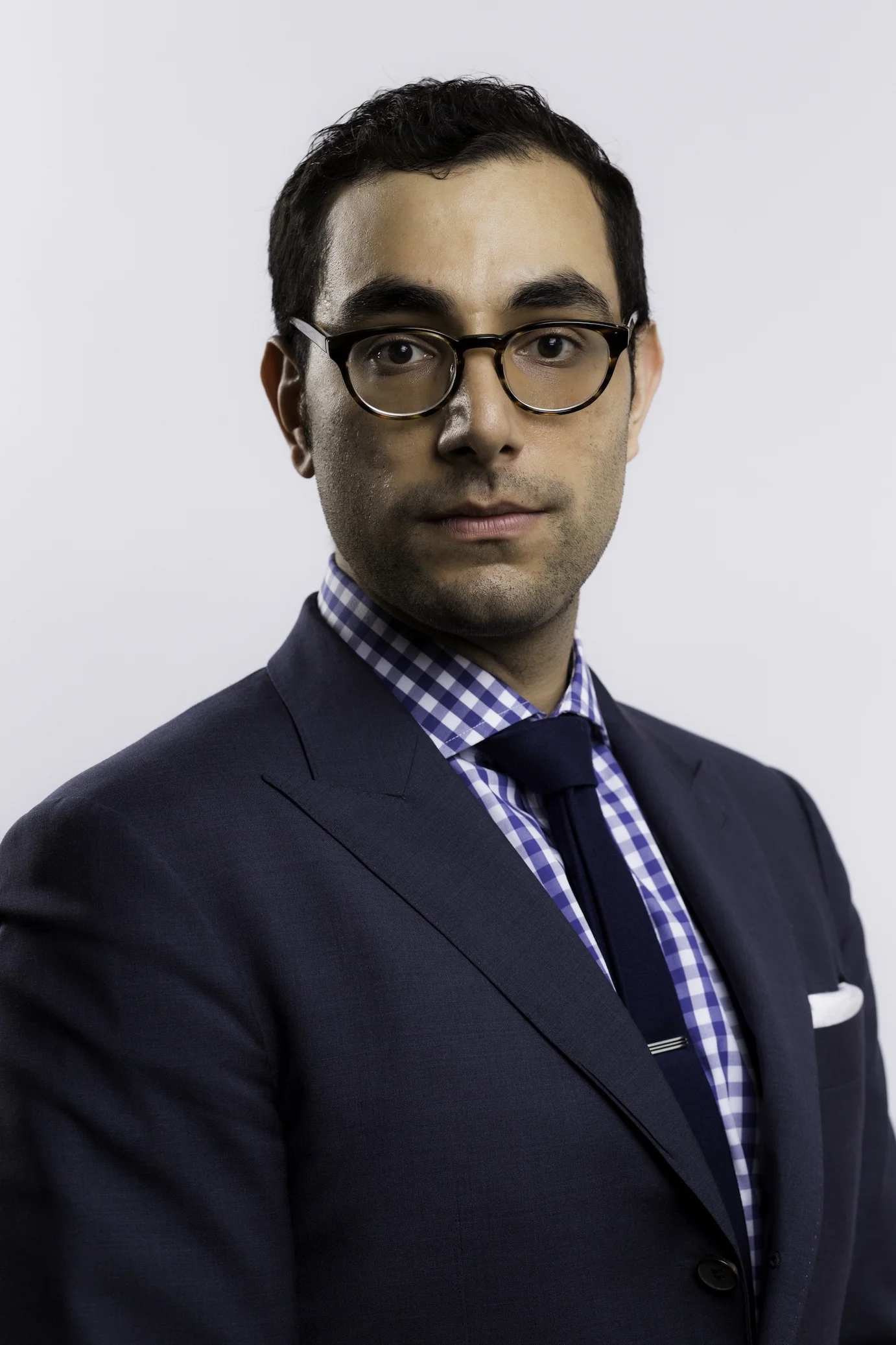
I'll be discussing the visa waiver issue ("HR158") on Brooklyn's BRICTV on Tuesday January 12th. It's certainly complicated legislation and the effects of it, both directly in terms of travel rights and indirectly in terms of international relations, have yet to be seen. I hope to dissect it and provide a balanced, intellectually honest assessment of the complex law. I also hope to drop a few f-bombs on camera.


Discussing Senator Chuck Schumer's opposition to the Iran nuclear deal

Discussing Senator Chuck Schumer's opposition to the Iran nuclear deal

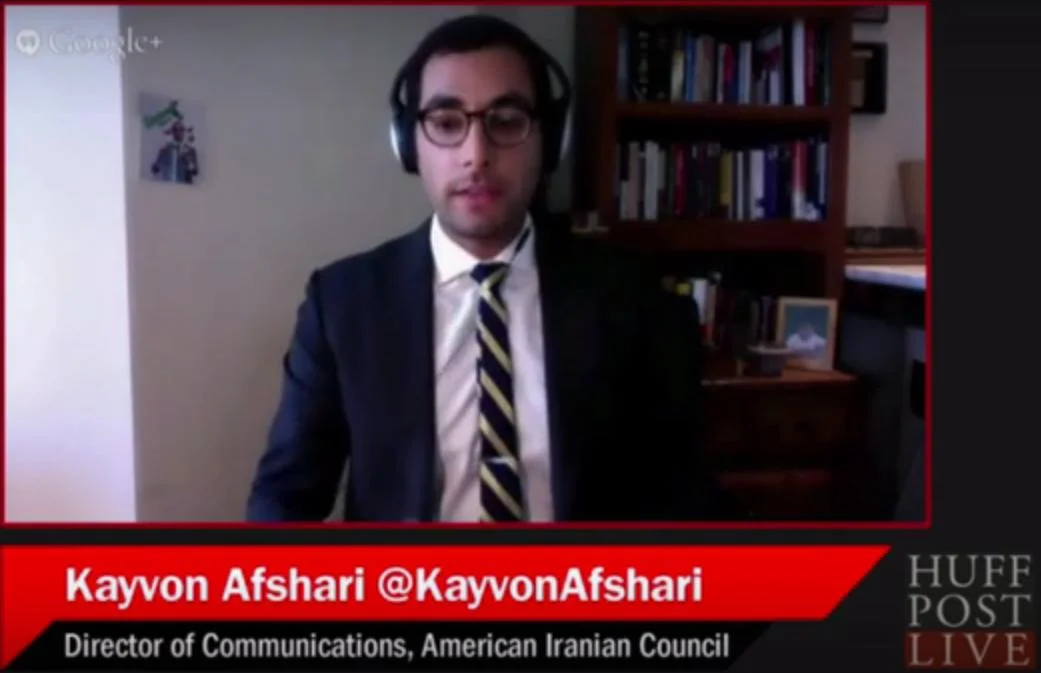
In this interview with HuffPost Live, AIC Director of Communications Kayvon Afshari discusses Senator Chuck Schumer's recent announcement that he will oppose the nuclear deal with Iran.

Afshari points out that Schumer makes maximalist demands of Iran, saying, "One of the demands that he makes is 'anytime, anywhere' access to any of Iran's non-nuclear, military facilities. Iran is not a defeated party here. Iran is not Imperial Japan, which had two atomic bombs dropped on it and is acceding to terms of surrender. Iran has been negotiating on this issue for a long time."

Read More

Discussing US-Iran relations on HuffPost Live

I talked some more about the Iran nuclear deal with HuffPost Live’s Alyona Minkovski.

I argued that,
1. the deal needs to be used as an opportunity to pivot toward broader US-Iran relations
2. attitudes in Iran need to dramatically shift in order to prepare the country for these broader talks with the US— a government which the Islamic Republic’s leaders have viewed suspiciously as “the Great Satan” for 36 years.
3. while none of the Israeli political parties support the deal, many strategic thinkers and former intelligence officials in Israel (Ephraim Halevy, Meir Dagan, Ami Ayalon, Amos Yadlin) have basically supported the deal, and that
4. the Obama administration used the recent Camp David summit with Arab leaders as a giant arms sale bonanza for Lockheed Martin, Raytheon, etc.

Discussion on HuffPost Live on Nuclear Negotiations

In this interview with HuffPost Live, AIC Director of Communications Kayvon Afshari underscores the significance of a potential nuclear deal to the Obama administration, as well as the importance of the P5+1 countries and Iran having the same understanding of any final deal. He says, "I think that it's more important that they take the time now to deal with these really technical issues and achieve perfect clarity in the negotiations phase rather than walk away from it and have somewhat different interpretations in the implementation phase."

Afshari emphasizes the progress made in the form of Iran's concessions concerning its nuclear program, which go beyond the Non-Proliferation Treaty and the Additional Protocol. He says, "The Iranians have made major concessions here. Iran, as a non-weapons signatory to the NPT, has the right to produce nuclear power for peaceful purposes." He adds that this progress owes to the Obama administration's willingness to shift from a policy of zero enrichment to limited enrichment, which helped the parties find common ground. 

“What a successful nuclear deal would do is set a precedent whereby diplomatic engagement will have peacefully resolved such a thorny 15 year old international issue. This is not just a deal about centrifuges and uranium enrichment this is about mistrust between the US and IR. there are huge issues that have separated these countries for the past 36 years. An honest inspection of this relationship has to conclude that the mistrust runs both ways and that both sides have harmed each other," he said.

Interview on HuffPost Live about Iran nuclear negotiations

Interview on HuffPost Live about Iran nuclear negotiations

In my interview with HuffPost Live, I stressed the importance of having an "intellectually honest" discussion on the nuclear negotiations and argued that Iran has made significant concessions. It got heated at a few points, but by sticking to the facts, I made my point more clearly than the detractors.

Read More

Interview on Iran Nuclear Deal

Interview on Iran Nuclear Deal

Kayvon Afshari sits down with Another Thing's Larry Mendte, to discuss the Iran nuclear negotiations, which faces staunch opposition domestically both in the U.S. and Iran.

Despite harsh realities, Afshari remains optimistic that a nuclear agreement will be reached. Afshari stressed that, "The Obama administration has expended a great deal of political capital on the negotiations and along with the high stakes implications involved, the administration needs a win.

Read More

Obama’s Strategy to Win Senate support for an Iran Nuclear Deal

Obama’s Strategy to Win Senate support for an Iran Nuclear Deal

Originally published by the American Iranian Council
By Kayvon Afshari and Michael Brooks

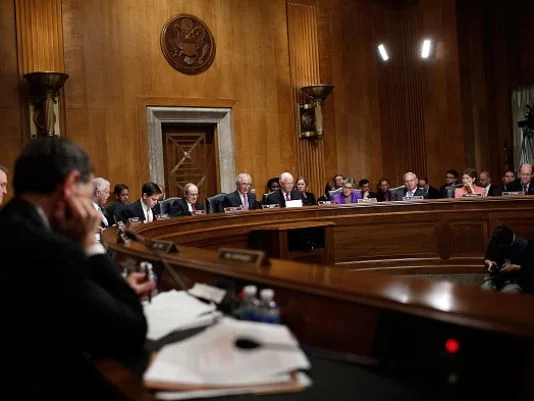
Now that the Senate Foreign Relations Committee has passed a bill to give Congress oversight over a comprehensive nuclear deal with Iran, the Obama administration would be wise to devise a strategy to turn Congressional review to its political advantage. Despite the ‘anti-Iran-deal’ money generously provided by big name donors, there are key vulnerabilities that the administration can exploit to put the pressure on both Democratic and Republican Senators who will be struggling to decide whether to vote up or down on a deal. Here’s what the political landscape looks like, what the Obama administration is already doing, and how we think they should play it in the months to come

Read More

Iran’s anti-American rhetoric is a good sign for nuclear negotiations

Iran’s anti-American rhetoric is a good sign for nuclear negotiations

Originally Published in The Middle East Eye

By Kayvon Afshari and Michael Brooks

Since the 1979 Islamic Revolution, anti-American rhetoric has appeared frequently in Iranian politics. That rhetoric flared up again at the Supreme Leader’s recent speech in his home city of Mashhad. With the deadline for a political framework for a nuclear deal fast approaching, some have argued that Iranian chants of “Death to America” at that speech and elsewhere should delegitimise the negotiations. 

While the rhetoric isn’t helpful from an American perspective, its presence is counterintuitively a good sign for a diplomatic resolution. Look forward to hearing more provocative language from Iran’s Supreme Leader, and possibly even from the generally soft-spoken President Rouhani, from now until the ink dries on a potential comprehensive deal.

This is due to the fact that for Iran to make pragmatic nuclear concessions to the US and its P5+1 partners, the Islamic Republic’s leaders must reconcile their revolutionary anti-Americanism with their unprecedented public diplomatic engagement with the US. In order to best understand this tension, one must consider the ideological foundations of the Islamic Republic, the history of US intervention in Iran, as well as the international and economic pressure empowering Iran’s pragmatic politics

Read More

Can US-Israeli relations be repaired after Israel’s election?

Can US-Israeli relations be repaired after Israel’s election?

By Kayvon Afshari and Michael Brooks

The fallout from Israeli Prime Minister Netanyahu’s address to Congress on the nuclear negotiations with Iran poses an important question: is there a long-term structural fissure between the US and Israel, or is this simply a personality conflict between Obama and Netanyahu?

With the Israeli elections coming up on 17 March, the answer is particularly important, as it indicates whether a change in leadership can resolve a potential structural fissure, or if it will simply mask over those deep policy differences with more welcoming handshakes and cosmetic smiles.

Obama and Netanyahu certainly do not get along well, indicating that, at the very least, there is a real conflict between leaders. However, this personality conflict has metastasised to the extent that it has laid bare the significant policy disagreements on Iran’s nuclear programme and, to a lesser extent, the Palestinian issue.

This public rift between the US and Israel likely cannot be resolved by a new Israeli prime minister, as Netanyahu’s opponents, if elected, are unlikely to implement significantly differing policies from those of the Likud leader

Read More
'Iran Chat' with a former Iranian Nuclear Negotiator

Ambassador Hossein Mousavian, former spokesman for the Iranian nuclear negotiating team, discusses US-Iran relations and the nuclear issue in this exclusive Iran Chat interview. He says that he does not believe the nuclear issue is really about centrifuges, but rather about the hostility between the two countries. While he says that the mistrust is mutual, he argues that Iranians have more reasons to be mistrustful of the United States than vice versa.

'Iran Chat' Interview with former US Nuclear Negotiator

Robert Einhorn, former senior advisor to the US nuclear negotiating team, discusses the Iranian nuclear issue in this exclusive interview with the AIC's Kayvon Afshari. Mr. Einhorn says that, while existing sanctions have played an "important role" in bringing Iran to negotiate very seriously, new sanctions are not necessary at this time.

Interview about State of The Union

I was interviewed on The Majority Report about Obama's statements on Iran during his State of the Union Address, as well as Congress inviting Netanyahu to address them and Senator Bob Menendez's statements that the White House's talking points "sound like they're coming straight from Tehran."

Interview with Gary Sick

I interviewed Dr. Gary Sick, who served in President Jimmy Carter's National Security Council, on US-Iran relations. He says that the core issue separating the two countries isn't the nuclear issue, terrorism, or human rights. It's history. Watch the interview for more.

The Geneva Talks: No Breakthrough, Yet much Accomplished

Kayvon Afshari

Director of Communications, American Iranian Council

November 9, 2013

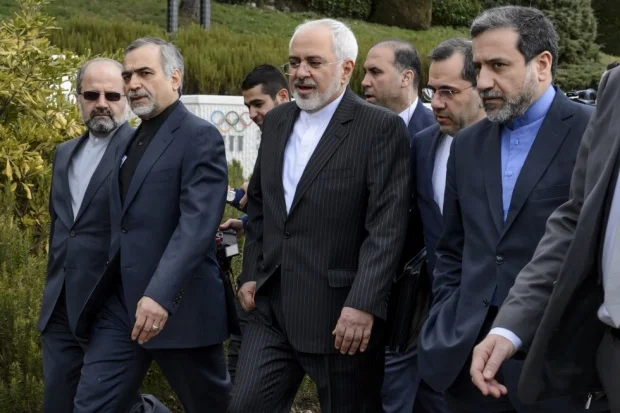
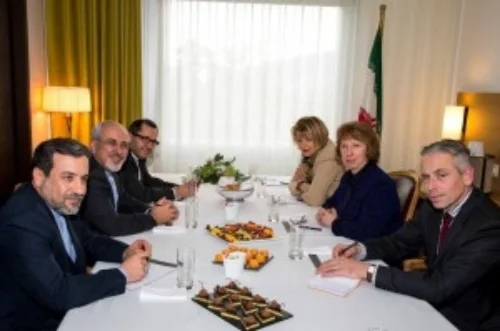
Zarif Meeting with Ashton

After three days of serious, high-level talks in Geneva, the P5+1 announced that a deal has yet to be reached on Iran’s nuclear program. Catherine Ashton, the European Union foreign policy chief, said that they would meet again on November 20th at the senior diplomat level, rather than the foreign minister level.

Secretary of State John Kerry tried to stay upbeat, telling journalists, “We came to Geneva to narrow the differences, and I can tell you without any reservations, we made significant progress. It takes time to build confidence between countries that have really been at odds with each other for a long time now,” he said.

Mohammad Javad Zarif, Iran’s foreign minister in charge of the nuclear negotiations struck a similar tone, saying, “It was natural when we started dealing with the details there could be differences of views. But we are working together and hopeful we will be able to reach agreement when we meet again”

Click here to read the full article

New Leadership in Iran: Time for Rapprochement?

I will be moderating tonight's discussion on US-Iran relations at George Washington University. Tune in to C-SPAN.org at 4pm for the live streamcast.

Panelists will include: Dr. Patrick Clawson of The Washington Institute for Near East Policy; Dr. Andrew Parasiliti of Al-Monitor; Prof. Hooshang Amirahmadi of American Iranian Council; and Amb. William Miller of the Wilson Center.

Conference program below


Can Obama and Rouhani Make Peace?

Dr. Hooshang Amirahmadi and I answer the question "Can Rouhani and Obama Make Peace?" in the latest issue of Foreign Policy Research Centre's journal. Hint: Yes they can, but it will be very difficult.

Can Obama and Rouhani Make Peace?

Masters Thesis: Israel's Strategic Choice on Iran's Nuclear Program (May 2012)

While Israeli leaders frequently assert that “all options are on the table” regarding a pre-emptive strike on Iran’s nuclear facilities, a unilateral strike is unlikely to materialize based on Israel’s strategic choice between pre-emption and acceptance laid out in this paper. A utility function assessing the costs and benefits of both choices demonstrates that acceptance of the Iranian nuclear program is clearly the better option than attempting to destroy it. This is due to four reasons: (1) a pre-emptive attack is unlikely to be successful, (2) Iran is very likely to retaliate after such an attack, (3) Iran possesses a significant non-nuclear arsenal for retaliation, and (4) the costs of a nuclear Iran, while significant, are not threatening enough to make a strike the better option.Click here to read the full paper